
Pelican Crossing
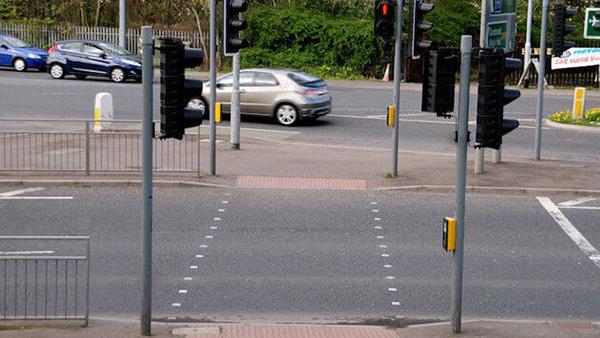
Pelican crossings use buttons, lights and sometimes, sounds to allow pedestrians to cross the road safely. Pelican is short for Pedestrian Light Controlled Crossing.
These crossings do exactly what they say. The pedestrian presses a button, traffic is brought to a stop by traffic lights and the pedestrian is instructed to cross by a signal on the opposite side of the road.
On the approach to a Pelican crossing, you’ll see white zigzag lines to indicate a crossing. You’ll also notice metal railings along the side of the road. These are designed to discourage pedestrians from crossing outside the designated Pelican crossing. Drivers should look to see whether pedestrians are waiting at either side of the road. Apply the mirror, signal and manoeuvre routine, then be prepared to stop as the traffic lights may turn red.
As a driver, you’ll see a combination of traffic light sequences at these crossings.
Red traffic light
You must stop behind the solid white line if the traffic light is red. Crossing over the line ever so slightly could result in failing your driving test or three penalty points, and a fine.
Amber traffic light
If the amber light is continuously illuminated (not flashing), be prepared to stop. Driving through an amber light is only acceptable if you have already crossed over the stop line, as it changes or if stopping is dangerous, for example, in bad weather or if there is a higher chance of an accident.
Flashing amber traffic light
Before you get the green light, you’ll see a flashing amber light. This means a driver needs to give way to any pedestrians who may still be using the crossing. However, if the crossing is completely clear, then you may proceed.
Green traffic light
Green means go. Always look before proceeding, though, to make sure there are no pedestrians or other cars in the way.
Puffin Crossing
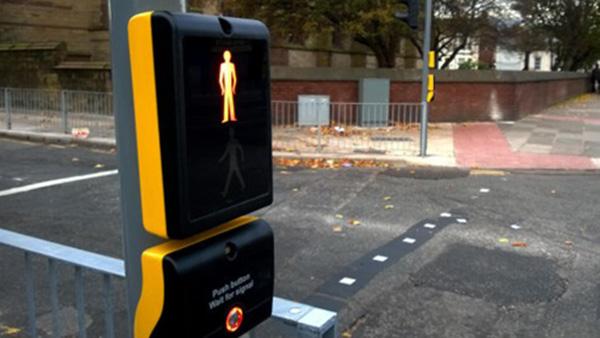
The Puffin crossing is the smarter, version of the Pelican crossing. Puffin is short for Pedestrian User-Friendly Intelligent Crossing. They operate in a very similar way to the Pelican crossing. However, they are fitted with smart sensors. These can tell when the crossing is clear to release the traffic with a green light or when a pedestrian may be taking longer to cross the road, and so can hold the traffic at a red light a little longer. The other difference is that the signal to tell pedestrians when it is safe to cross is beside them, rather than on the opposite side of the road from them. This also encourages pedestrian users to look in the direction of oncoming traffic to aid them with the visual sight of oncoming traffic and whether it is slowing down or not.
As with the Pelican crossing, ensure you look out for pedestrians waiting to cross. Apply the mirror, signal and manoeuvre routine and be prepared to stop if the button has been pressed and pedestrians are waiting at the crossing. Although like a Pelican crossing, Puffin crossing lights do not utilise the flashing amber traffic light. They operate just like a normal traffic light. A pedestrian may cross at a strange angle and not trigger the sensor, so always be on the lookout for pedestrians at a Puffin crossing.
Toucan Crossing
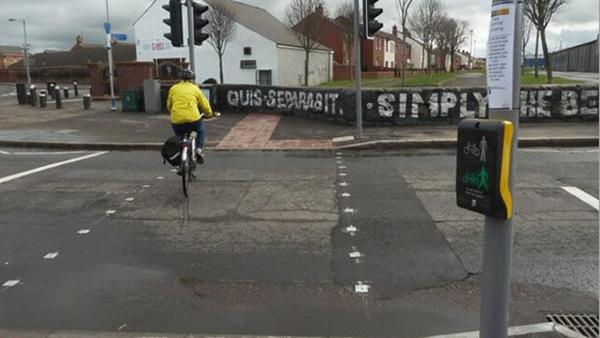
Toucan crossings are designed so both pedestrians and people cycling can safely cross the road side-by-side. Apart from the addition of a cyclist crossing, they are almost identical to Puffin crossings. They are slightly wider to accommodate both pedestrians and cyclists. Toucan crossings are generally only found close to parks or where cycle lanes are present.
As you would with a Pelican or Puffin crossing, keep an eye out for any pedestrians or cyclists who are waiting to cross the road, apply the mirror, signal and manoeuvre routine and be prepared to stop should the lights change. The amber flashing light feature is not used at Toucan crossings, and traffic lights operate like normal. Be aware of any cyclists who may cycle across the road as the lights change.
Pegasus Crossing
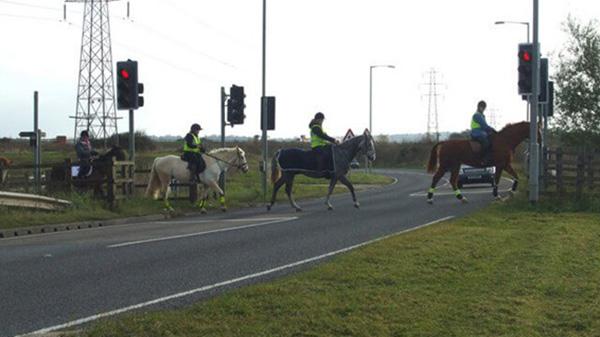
Also known as an Equestrian crossing, Pegasus crossings are designed for pedestrians and horses to cross the road safely together. These are the least common type of pedestrian crossing you’ll see in the UK. Pegasus crossings tend to be located near racecourses or horse training areas and even feature an additional button raised for riders to reach easily.
At a Pegasus crossing, you’re going to encounter horses, so avoid revving your engine and sudden movements, which may startle the horse and cause an accident. Make sure you leave plenty of room between your car and the crossing for the horses to cross the road safely and peacefully. At a Pegasus crossing, there is no flashing amber light, and the traffic lights will operate like normal. Ensure the horse and rider have completely cleared the crossing before moving off, and when you do so, move slowly so as not to startle the horse.